Prompt the case. Review a full operative report.
Operon is an AI that drafts endoscopic spine operative reports from short, structured case prompts. Every draft is reviewed and signed by the clinician, and Operon can run locally and privately within your practice.
- Clinician reviews and signs every draft
- Runs locally per practice
- Built for endoscopic spine
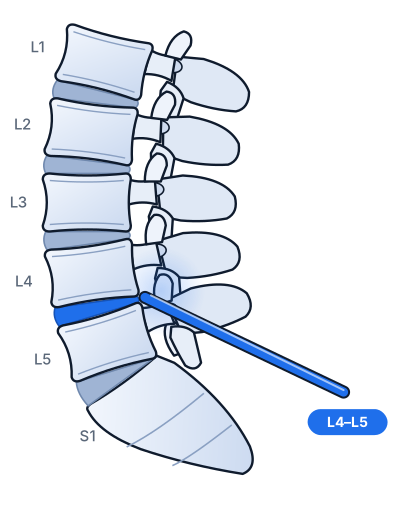
Endoscopic spine notes are narrow and high-stakes
Generic medical writing tools can invent anatomy, get the level or laterality wrong, or introduce open-surgery steps that do not belong in an endoscopic case. Surgeons end up rewriting the note, or inheriting language that creates clinical and coding risk.
Generic models miss the niche
Cervical and lumbar endoscopy has its own approaches, landmarks, and phrasing. Off-the-shelf text generators do not.
Wrong level or side is not a typo
Level and laterality errors in an operative report are documentation failures with real downstream cost.
Cloud PHI is often a non-starter
Many practices want documentation AI that can run on practice-owned hardware, without sending case text to a public training loop.
How it works
Short, structured case prompts in. A complete operative report draft out. Nothing is final until the clinician signs it.
-
Prompt the case
The surgeon captures the essentials in a short, structured case prompt: procedure, level, side, approach, and the operative findings that matter for this note.
-
Draft
Operon expands the prompt into a full endoscopic operative report, aligned to the surgeon’s own note library and style.
-
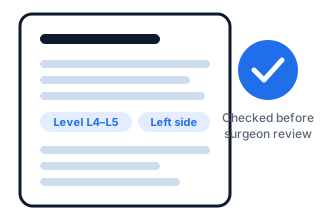
Review and sign
The surgeon reviews, edits freely, and signs. Operon drafts; it does not chart, diagnose, or close a note on its own.